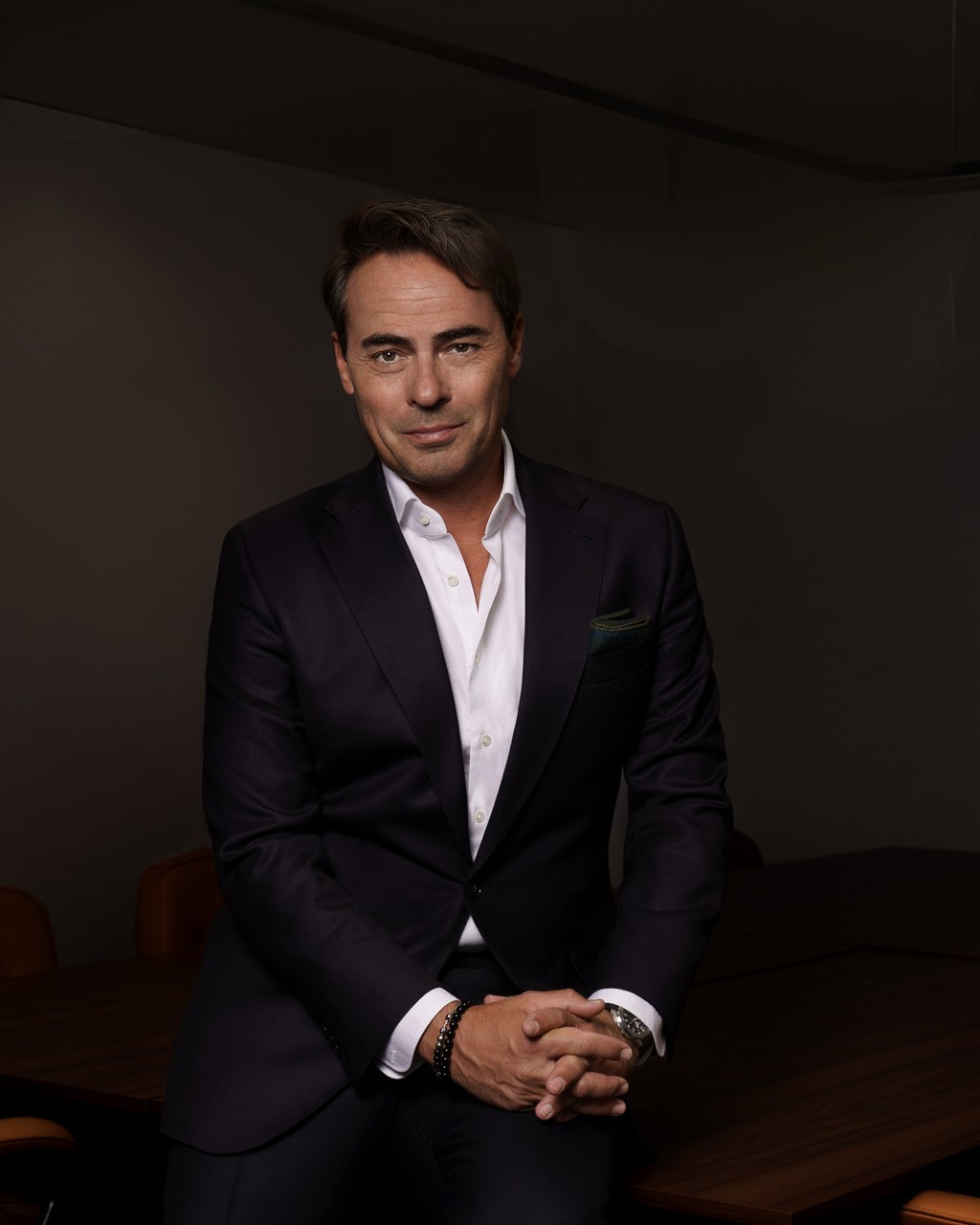
Top participants have the chance to spend 2 weeks in San Francisco.
What do you get from Bison Fellowship?
01
Connections
Meet other engineers, founders and researchers from OpenAI and other leading labs.
02
A mentor
Work with an experienced mentor who will help you develop as an engineer.
03
Support to build your startup
We'll help you develop your startup and connect you with people in the This is the World network.
04
A practical project
Spend 8 weeks working with your team on a project for one of Poland's largest companies. Your solution will go into production.
The program in a few words
What is Bison Fellowship?
A mentorship program that teaches product thinking to the most outstanding young engineers — people with a passion for technology and science — through 8‑week projects in AI, ML and physics, with real-world deployment at our partners. Every participant is paired with a mentor from the world’s top universities.
All fellows will take part in Spring School in late April and early May 2027. Top participants will have the chance to spend two weeks in San Francisco in June or July 2027 to meet startup founders, investors and AI researchers.
Alumni receive lifetime access to the This is the World and This is IT network, plus support for their next projects.
Program Partners · First edition
Knowledge Partners · First edition
Media Partners · First edition
Second-edition partners
To Be Revealed
01About the program
It started in Kraków.
In July 2025 we met hundreds of people who wanted to build. We couldn’t leave it without a sequel.
Being Human in the Age of AI · Kraków · Auditorium MaximumMaciej Kawecki · Wojciech Zaremba · Andrzej Dragan
Kraków·July 2025·Being Human in the Age of AI
In July of last year we hosted an event for olympiad winners, engineers and startup builders, named — at Wojtek Zaremba’s suggestion — Being Human in the Age of AI.
Bison Fellowship was born from that day. We want to help you walk the same path that Wojtek, Piotr and Rafał walked, building startups that are changing the world today — through LLMs, voice models and microsatellites.
02Manifesto
We believe that today the era of talent has arrived.A small group of people, given the right support and AI tools, can build products that change the world.The best engineers are right here in Poland.Today, more than ever, we have the potential to build 10× more unicorns that change the world for the better.
— Bison Fellowship, April 2026
03Who it’s for
We’re looking for people who want to build.
Faster, better, with more support. They don’t wait for a diploma — and they don’t wait for permission.
i.
Olympiad winners and competition finalists
Mathematics, computer science, the sciences. A proven ability to solve hard problems.
ii.
Computer-science and adjacent students
Who don’t wait for a diploma to start building.
iii.
Builders and designers with a portfolio
GitHub projects, shipped apps, open-source contributions? This is your place.
iv.
People with high agency
You don’t wait for permission. You see a problem, you build the solution.
04Journey
Five steps from application to demo day.
October 5 – November 11, 2026
Submit your application
Prepare your CV, a project or portfolio link, written answers and a two-minute video. Explain a problem you explored and show something you built.
Step 1 / 52026–2027
November 1–30, 2026
Interviews and results
Round one: November 1–15. Round two: November 16–23. Selection committee: November 24–29. Results: November 30.
Step 2 / 52026–2027
Early December 2026
Kick-off with partners
Meet the partners and explore the project challenges. Partners will prepare the data needed for your project by the end of December.
Step 3 / 52026–2027
January 10–15 → March 2027
Build your solution
Project work starts on January 10–15. With your team and mentors, progress from understanding the partner’s problem to building and testing a solution.
Step 4 / 52026–2027
Mid-March 2027
Demo Day
Present your solution, test results and lessons learned to the partners and the Program Council.
Step 5 / 52026–2027
For all fellows
Late April – early May 2027
Spring School
A spring school for all fellows after the project phase.
2027
A chance for top participants
June / July 2027
2 weeks in San Francisco
Top participants have the chance to spend two weeks in San Francisco and meet founders, investors and AI researchers.
2027
Scroll to continue →
05What you get as a fellow
What you get as a fellow.
01 / Mentoring
Mentors
Mentors who help you grow academically and professionally — from the world’s best universities.
02 / Network
Network
A community of exceptional engineers and founders. Relationships from the program last for years.
03 / Events
Access to events
Workshops, hackathons, demo days and meetings with investors. You learn from the people building Europe’s most interesting companies.
04 / Project
A real-world project
We match you to a team working on a real challenge from one of our partners. You build software that ships to production — and, if you choose, you can keep working with the partner or with a startup from our network afterwards.
06Program Council
Program Council.
The Program Council guides the direction of the program and — together with our partners — evaluates the fellows’ projects on demo day.
Honorary Council Member
Jolanta Kwaśniewska
First Lady of Poland, 1995–2005
Council Member
Rafał Brzoska
CEO, InPost
Council Member
Przemysław Gacek
CEO, Grupa Pracuj
Council Member
Esther Wojcicki
Educator · Stanford University
Chair
Maciej Kawecki
CEO, This is the World
Council Member
Marek Żołędziowski
CEO, Group One
07Mentors
Our mentors.
Poles with global success who personally guide the fellows — from top universities and labs.
Mentor
Prof. Maciej Dunajski
Professor of Mathematics · University of Cambridge
Mentor
Zuzanna Stamirowska
CEO · Pathway AI
Mentor
Prof. Dawid Kielak
Professor of Mathematics · University of Oxford
Mentor
Prof. Włodzisław Duch
Professor of Neuroscience · Nicolaus Copernicus University, Toruń
Mentor
Dr Krzysztof Geras
Co-founder, Ataraxis AI · NYU
Mentor
Prof. Artur Dubrawski
AI Researcher · Carnegie Mellon University
Mentor
Dr Janusz Pętkowski
AI & Astrobiology Expert · MIT
Mentor
Prof. Marek Cygan
AI Researcher · University of Warsaw
Mentor
Luke Kowalski
Vice President · Oracle
Mentor
Adrian Kosowski
Co-founder · Pathway AI
Mentor
Jan Kwapisz
CTO · Omniviser
Mentor
Przemysław Dębiak “Psyho”
Competitive programmer
Mentor
Marcin Koziorowski
Co-founder · Ecobean
…and more — the list of mentors keeps growing.
08Team
Team.
The team that walks you through the program — from application to demo day.
MD · Bison Fellowship
Michał Wyrębkowski
Co-founder, This is the World
Team
Aleksandra Warda
Project Manager
Team
Jarek Bielski
Bison Fellowship
Advisor & Ambassador
Jakub Skrzyński
Advisor & Ambassador
09Frequently asked
Before you ask.
The answers we hear most often. If your question isn’t here — write to us.
Q·01When does the program start?
Applications for the second cohort run from October 5 to November 11, 2026. Results will be announced on November 30, followed by a partner kick-off in early December.
Q·02How long is the fellowship?
Project work starts on January 10–15, 2027 and ends with Demo Day in mid-March. All fellows then attend Spring School in late April and early May.
Q·03Is the fellowship paid?
The program is free. It includes mentoring, a partner challenge and Spring School for all fellows. Top participants have the chance to spend two weeks in San Francisco in June or July 2027. Participants are selected individually.
Q·04Do I have to be in Warsaw?
Project work and mentor meetings use a hybrid format. In-person meeting details will be shared with participants.
Q·05Who can apply?
People aged 18–26 with a passion for technology and science. Show us your projects, how you think and what you want to build.
Q·06What does the recruitment process look like?
The application asks for contact details, date of birth, school or university, a CV, a project link and written answers. Include a two-minute video about a technical or scientific problem and something you built. Interviews take place in two rounds in November.
First edition · 2026
Meet the fellows already building.
The first cohort brought together 15 young engineers and scientists. Explore their projects, interests and achievements in the fellows’ profiles.
PKP Intercity
Machine learning to forecast demand for rail travel.
BLIK
A language-model router designed around data privacy.
Grupa Pracuj
Skill trees to help people plan their professional development.
Kombud Group
Predictive maintenance for critical infrastructure.